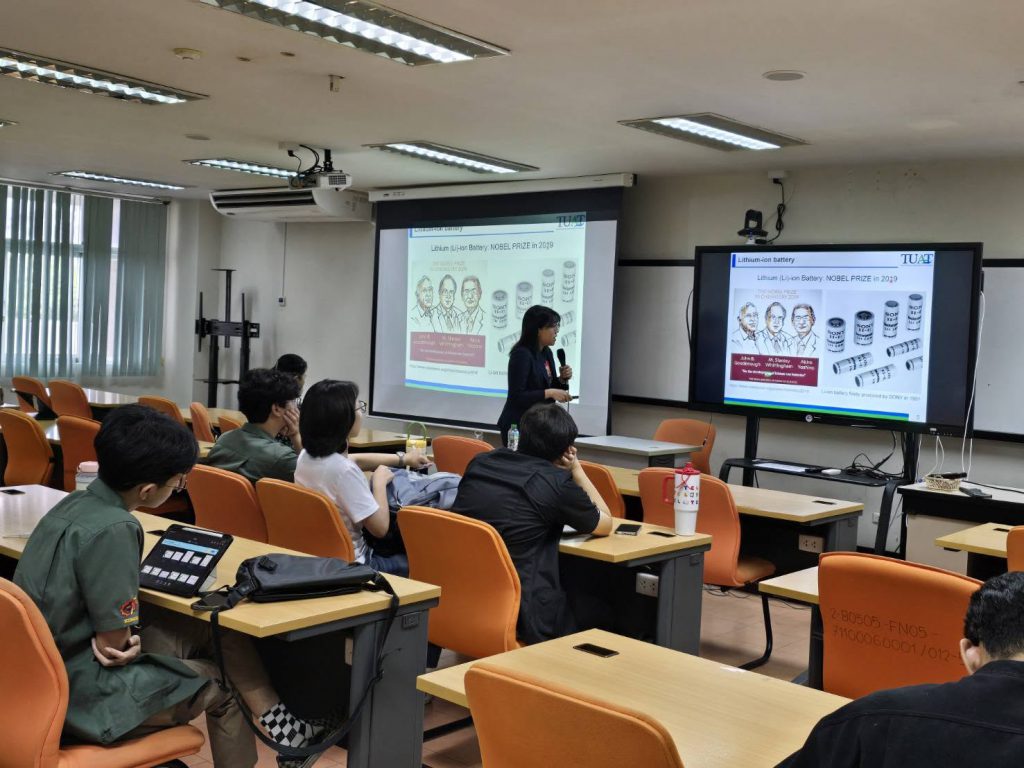
The Department of Materials Engineering, Faculty of Engineering, Kasetsart University, held a special lecture for course 01213441, Fundamentals of Polymer Materials, on 31 August, 2026. The event gave students an opportunity to learn about and exchange ideas on materials and energy technologies from an international perspective.
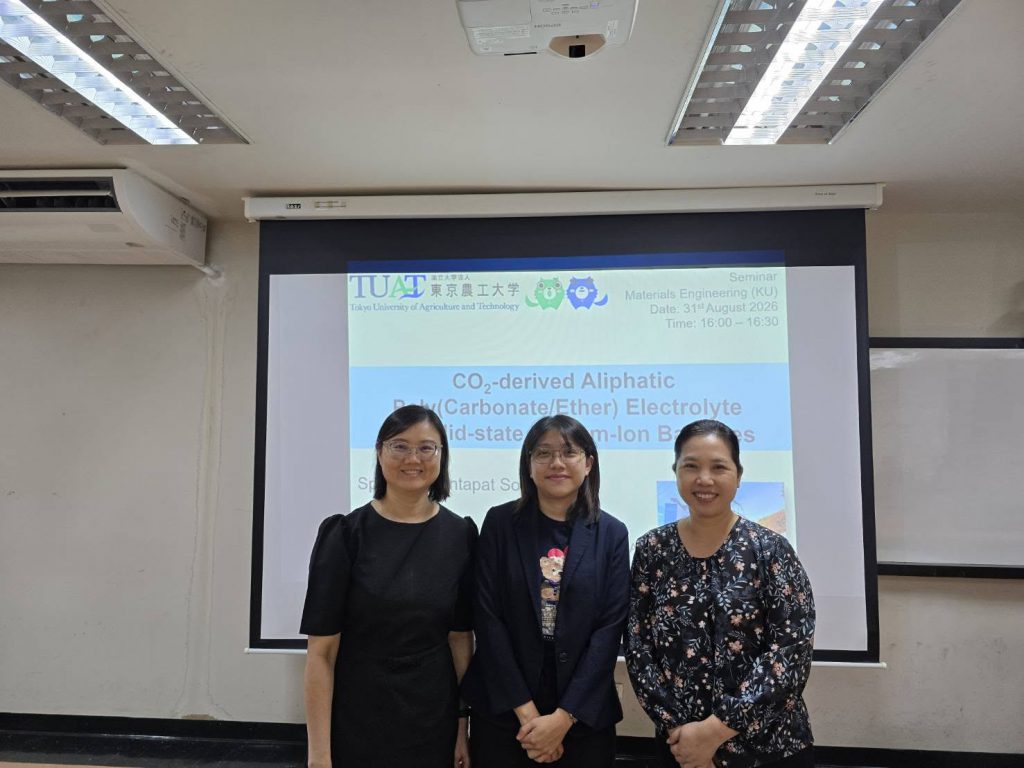
The department welcomed Dr Nanthaphat Sunthornnon from Tokyo University of Agriculture and Technology (TUAT), Japan, as the guest speaker. Her lecture was titled:
📌 “CO₂-Derived Aliphatic Poly(Carbonate/Ether) Electrolyte for Solid-State Lithium-Ion Batteries”
💡 A closer look at polymer innovations for future energy
The lecture focused on how polymer electrolytes can be developed for solid-state lithium-ion batteries. It also introduced an exciting approach: using carbon dioxide (CO₂) as a feedstock to synthesize polymer materials. This can add value to an existing resource while supporting the development of sustainable clean-energy innovations.
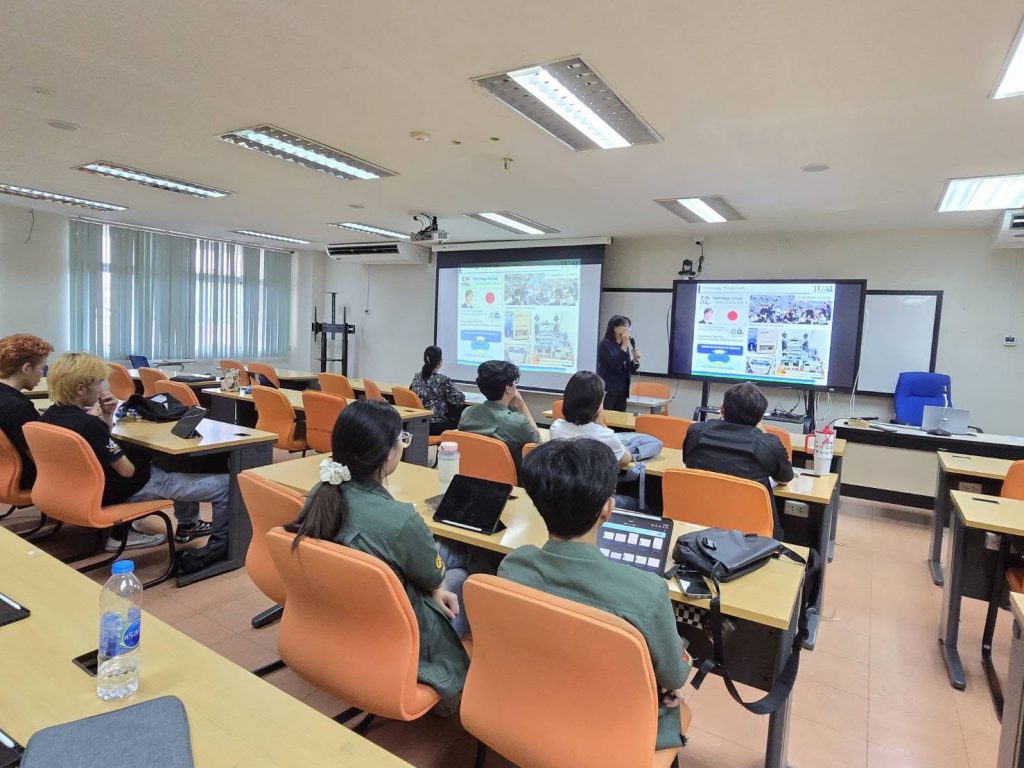
Key topics and perspectives the students gained included:
✅ Solid-State Batteries and Electrolytes: Understanding how solid-state batteries work and the vital role electrolytes play in battery systems.
✅ Polymer Structure Design: Designing the chemical structure of polymers for energy applications by considering the relationship between a material’s structure and its properties.
✅ R&D Framework: An end-to-end approach to battery materials research and development, from structural design and property analysis to their application in real energy-storage systems.
✅ Materials Engineering in Energy: How materials engineering advances energy technologies by bringing together knowledge of chemistry, polymers, and engineering.
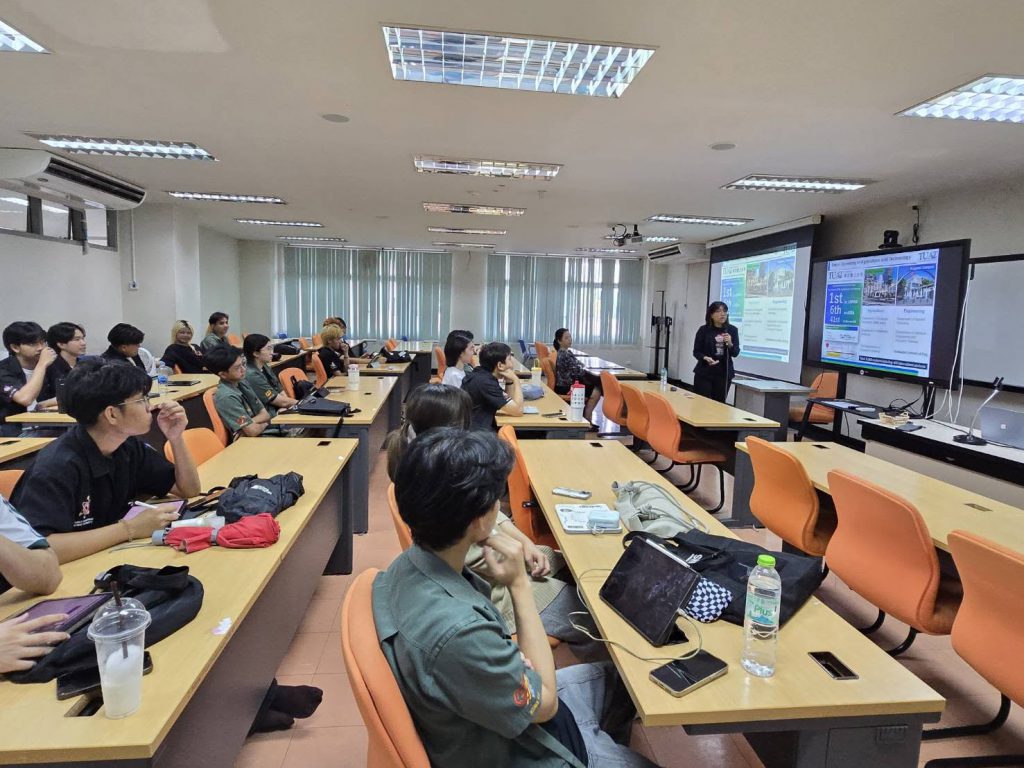
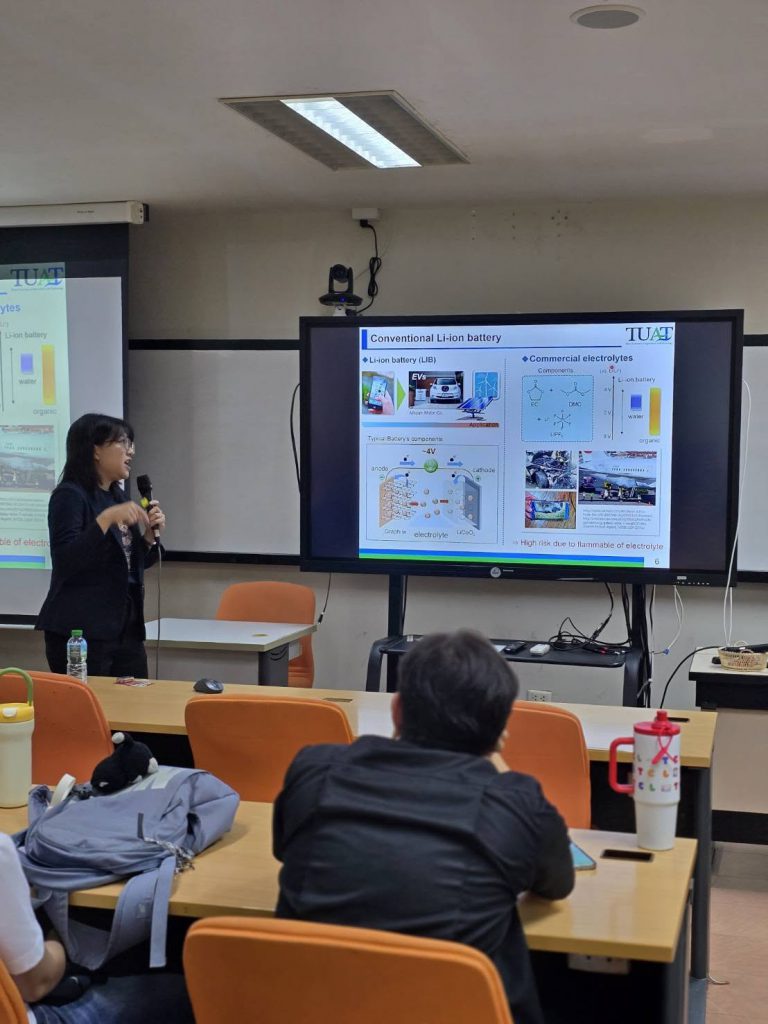
An engaging and inspiring exchange
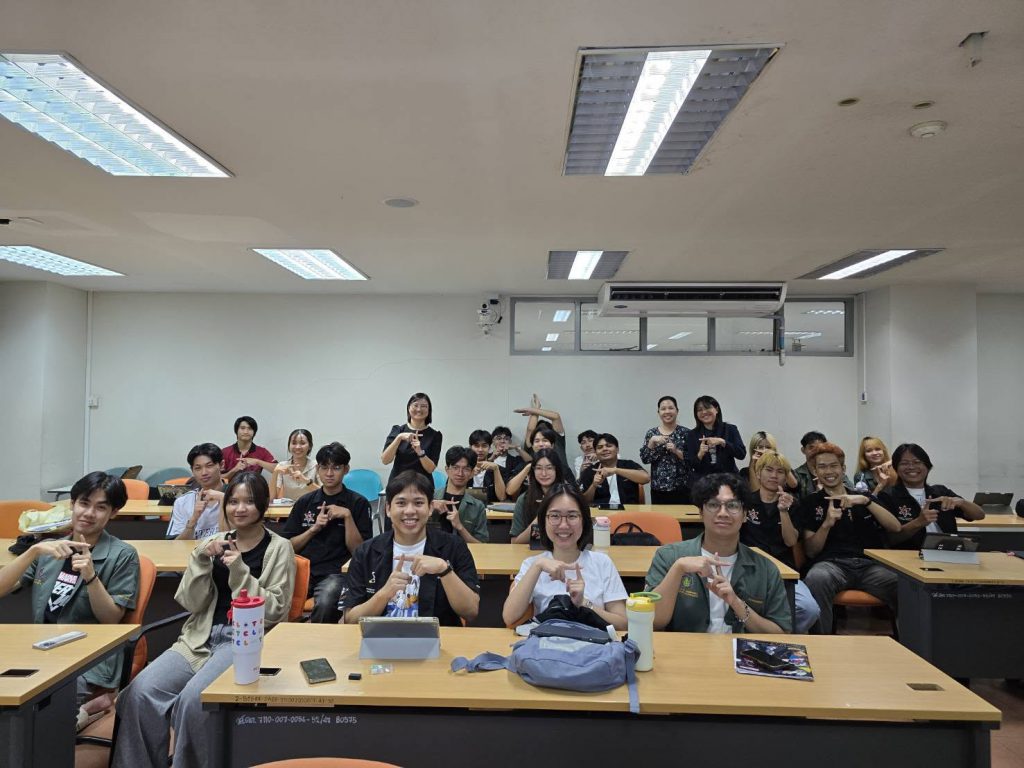
The lecture was warmly received and drew strong interest. Students had the opportunity to ask questions and learn first-hand from a leading researcher. The experience broadened their perspectives on pursuing further studies, conducting in-depth research, and applying their knowledge to develop new innovations.
The event showed that materials are central to advancing energy technology. Developing new materials means more than improving what already exists; it also involves finding alternative materials that can create greater value from available resources.
The Department of Materials Engineering, Faculty of Engineering, Kasetsart University, extends its sincere thanks to Dr Nanthaphat Sunthornnon for sharing her knowledge and valuable research experience, and for inspiring students to see the opportunities and importance of materials engineering in changing our world.
“Future technologies may begin with the design of a single material — turning knowledge into innovations that create value for society.”